
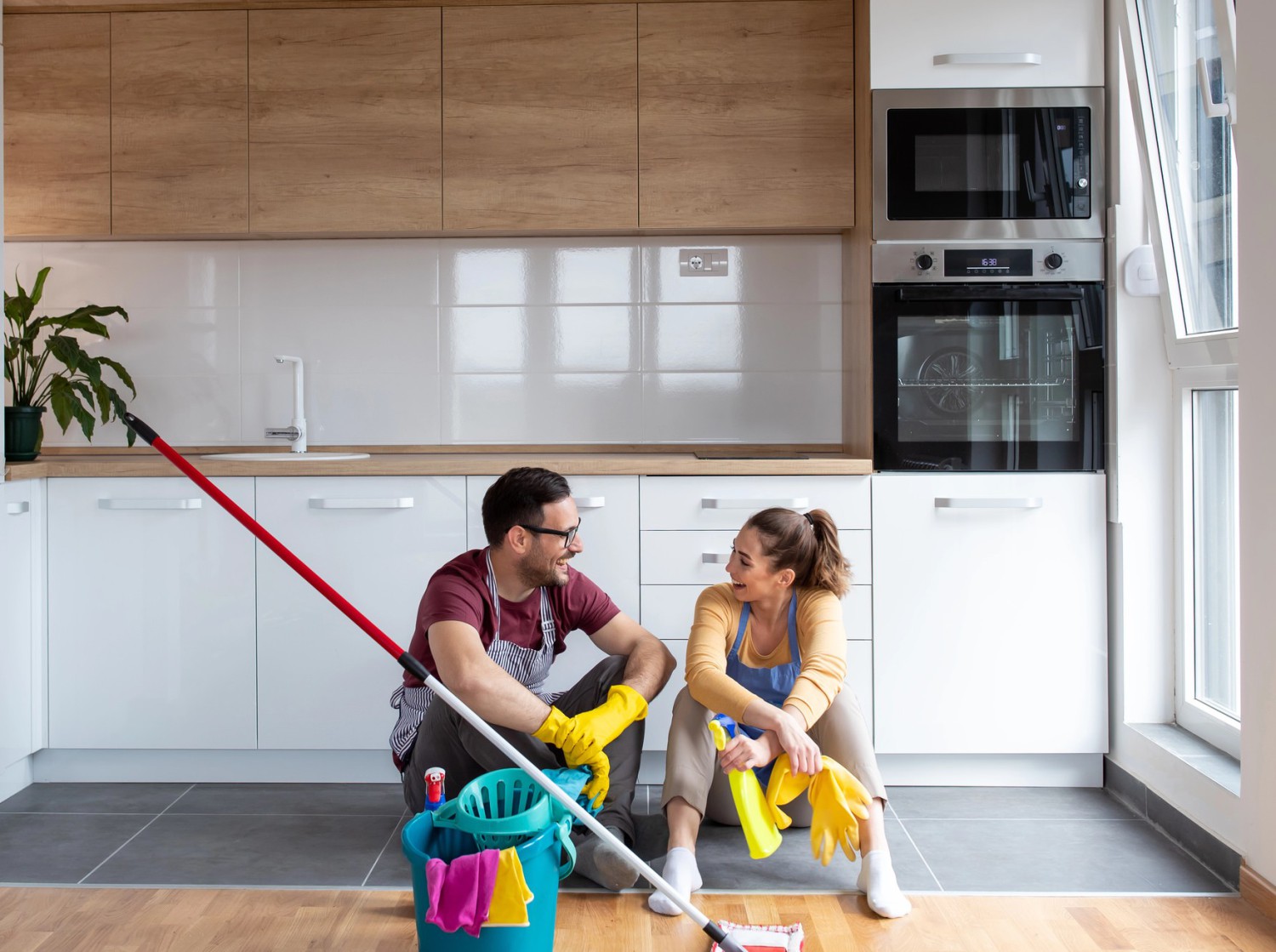
Footprints, paw prints, dust, greasy food spatters, or premature wear and tear can spoil your floors’ appearance on a daily basis.
So how can you keep your floors looking great with minimal effort?
Make Sure Dirt Stays Outside
The first step is, of course, to place doormats to catch sand, salt, and small stones (especially in winter). Even a single grain of sand can, over time, scratch the surface. As can a tiny stone lodged in the sole of a shoe.
Using area rugs or removing shoes when indoors helps prevent further harm to the floor.
Focus on Consistency Rather Than Intensity
We often tend to put off housework, telling ourselves we’ll do a big clean later. In fact, it’s the little, everyday cleaning habits that have the greatest impact.
In the course of normal daily life, carrying out a few simple chores is enough to minimize damage:
- Give high-traffic areas a quick vacuum (every day).
- Wipe up any spills or dirt as soon as you see them.
The result: a floor that maintains its appearance longer with less effort on your part.
Beware of Water: An Underestimated Foe
We instinctively associate cleanliness with water. Yet, for many types of flooring, this is precisely where the problems start.
Excess moisture can lead to swelling, spoil the finish, or even cause the material to deteriorate prematurely, particularly in the case of hardwood. The point isn’t to avoid cleaning, but to do so with care.
A slightly damp mop is more than enough. The floor should never be left soaking wet. In fact, gentle but frequent cleaning gives better results than the occasional thorough scrub.
- A robot vacuum that mops as well as vacuums is another option. An increasing number of low-budget models are appearing in stores.
Use Products Specially Formulated for the Type of Floor
Products that promise a flawless finish or instant shine may sound appealing, but they aren’t always suited to regular use.
Over time, some leave an invisible film that alters the floor’s appearance. It then becomes dull, and sometimes even slightly sticky, which attracts more dust.
A gentler approach often proves more effective: a cleaner formulated for the type of floor or a mild solution, heavily diluted.
- Steam cleaners excel at this task: they clean thoroughly without chemicals. They can even restore tile grout to its original condition. Use them at the beginning of each seasonal change.
Prevent Scratches
Furniture frequently causes scuffs and scratches. But you can easily reduce the chances of this happening by sticking felt pads underneath the legs, by covering your pet’s claws with caps, and by not dragging furniture along the floor. Always lift, even if just a little, to move it.
Other daily habits that make a real difference:
- Trim your pet’s claws regularly (this usually works better than nail covers alone, as they can fall off).
- Use wood-floor-friendly caster wheels (rubber rather than hard plastic for office chairs).
- Apply a protective treatment (suitable oil or varnish) every few years to enhance the wood’s durability.
Put Rugs to Work!
In addition to relying on doormats to catch dirt from outside before it gets in, it’s also a good idea to place other rugs, small or large, strategically around the house.
Focus mainly on high-traffic zones such as hallways or the kitchen (in front of the sink and cooking appliances or under pet bowls). Dust also tends to accumulate in the corners of stair treads: area rugs can minimize this while protecting the surface.
Tips:
- Opt for rugs that are easy to clean (some are even machine washable!).
- Avoid rugs in moisture-retaining materials.
- Stabilize the rugs with under pads (or non-slip mats).
- Choose textured materials or darker patterns (to hide the dirt).
Adapt Your Cleaning Routine to the Season
In our climate, floors face different challenges in January than they do in July. Adjusting your cleaning routine to suit the time of year is a sensible approach!
In winter, salt, water, and sand build up quickly. Extra care is needed, particularly around entryways.
Spring brings its share of mud and rain, whereas generally milder summer weather means the floors require less maintenance.
In autumn, leaves and damp can once more make their way into the house: it’s time to take certain precautions again, such as placing rugs in key spots.
Adapting to these seasonal changes helps to extend the life of the floor without any extra effort.
And Most Importantly: Don’t Obsess Over It!
Despite all this…
Even with the best care, no floor can remain like new forever!
A little wear and tear in high-traffic areas or a few minor scratches are all part of the floor’s natural ageing process. Rather than striving for an unrealistic standard of perfection, it makes more sense to aim for a balance: a floor that is clean, well maintained, and beautiful day to day.